A blog about the amazing things teenagers do, about writing for teens, books for teens, and occasional forays into my world and the world of publishing.

Wednesday, August 4, 2010

Trek--The Final Chapter

Wow! So much has happened in the last couple of weeks that I haven't had time to finish my Trek Log Blog. (Sounds like something from Star Trek or Dr. Seuss). So to all of those readers who have waited with breathless anticipation to find out how Trek turned out, (hi Mom!) I present…

TREK THE FINAL CHAPTER--Day Four

The final day of Trek began like the others—making breakfast, packing carts, reading scriptures, and saying prayers. But these weren’t exactly the same kids who had left Gooseberry Flats three days before. It was evident in the way they interacted, the way they took charge of the tasks necessary to get ready to go, and in the way they packed the carts. (Tight like a dish.)

Their conversations were about getting home, showering, being able to use a cell phone, or even a flush toilet again. Even with everything they were looking forward too, I could see that they were sad to be leaving Trek behind. (Maybe not willing to stay another couple of days, but still sad.)

On the last day, the youth led out. When they

encountered a fence, their first obstacle, they figured out the best way around it, made it through and then left someone at that point to direct the

carts coming behind them.

Along the way they stopped for a funeral (one of the "babies" they received on the first day had been declared dead). This was the third funeral of the Trek and the most solemn. By this point I think the youth felt the funeral more deeply because after three hard days it was easier to relate to the hardships the pioneers faced. Leaving behind the baby doll reminded the youth that not all of the pioneers made it to the end of their journey in the real pioneer trek.

Four years ago when I went on Trek, the road home was a lot rougher than it was on this last day. In fact, the original Lacey Stake Trek twelve years ago had to re-build the road before they could travel it. Thanks (or no thanks), to the Forest Service the road was much smoother, (do you get the idea that Mormons like to make thin

gs hard on their youth in the name of a learning experience?) I was worried that an easier road would make the last day of Trek less memorable, but I don’t think it was a problem. Instead of having to overcome obstacle after obstacle, the Trekkers had the chance to hold a “debriefing” with their families. They took the time to leave the trail, find a spot in the shade and talk about their Trek experience. They discussed what they had found out they could live without like cell phones, internet, make-up, and indoor plumbing. What they had learned about themselves and what they could accomplish. What they had learned about each other. What they had learned about their ancestors and about their faith.

I had the chance to reflect too. I thought about four days without my e-mail, cell phone, and other technology constantly calling for my attention. I thought about quiet moments of reflection in the mountains. I thought about the amazing strength of 150 youth, what they had accomplished by working together. I thought about what strength and commitment they would be taking with them into high school and beyond.

When left the roughest part of the road, the Trekkers were reunited with two girls that couldn’t make that part of the trip because they had to ride in the cart. The reunion was sweet and from that point, the girls would travel with the rest of the group to the end of the trail.

Cart by cart the youth finished their Trek at Taneum Campground. They were met by cheering family members and leaders, a modern barbecue (no fry bread, woo hoo!), and the real world. Coming into the campground we saw normal people in normal clothing--people who had actually been able to shower within the last twenty-four (or even 48hours. It’s funny how you don’t realize how dirty, smelly, and well, weird you look on Trek because everyone looks exactly the same. Then you meet someone who is clean and...oh, heck at that

point you still don't care, because you have made it to the end and all of your best friends look as wonderfully dirty and weird and smell as bad as you do!

Pulling the carts into the unloading area was a bittersweet moment. No more trekking--walking in the heat and the dust, eating fry bread (okay I will let that one go now), pulling and pushing heavy up the side of a steep mountain carts. But at the same time time no more Trek--working with your friends, laughing on the trail, making up crazy songs, showing how tough you can be. No more of the spirit that accompanies every moment of Trek.

Bittersweet.

We were nearly home (the wonders of modern transportation!) before I realized nobody had turned on the radio and I hadn’t even checked my voicemail. It was like we needed those few hours and a quiet ride home to adjust to the real world.

I will file this Trek experience with my other Trek experiences--among my fondest memories. I left Trek with a renewed hope for the youth of the world, a stronger commitment to I can do hard things, a deeper gratitude for the pioneers who went before me, and a deeper faith in the gospel of Jesus Christ.

Going back to Day One and the complete craziness of what we asked 150 teenagers to do, and what they did do (for the most part) willingly.

For four days and about twenty-six miles they trekked together. They got hot and dusty, and hungry and tired. There were moments when I'm sure they wanted to give up (I know I did,) but they kept going. They left with sore muscles, blistered feet, and little bits of the mountain (in the form of dust) clinging to their bodies. After the showers were taken and their stomach full of something besides fry bread (I know I said I would let it go), after the sore muscles and blisters have healed, I hope the things that will still cling to them are a stronger belief in themselves, a commitment to serve and help each other, and an increased faith in the Lord.

Sunday, August 1, 2010

Trek--Day 3


I woke up with a wonderful thought on day three (and I'm assuming most if not all the other Trekkers shared this same thought)...

A DAY OF NO TREKKING!!!

Day three was reserved for pioneer activities, rest, and spiritual discussions. The pioneer activities included black powder rifles, crafts made out of leather, wood, and horse shoe nails, and pioneer games like hoop rolling, gunny sack races, cherry pit spitting contests, tug-o-war, and a (fake) buffalo chip throwing contests. Those that wanted to were able to do laundry, pioneer-style. (Two days of Trekking in the dust with only one extra outfit made even doing laundry on a wash-board sound good.)

The most popular station was the hair-washing station. Even though the water was from the creek, icy cold, and not completely bug free, the kids lined up to get their hair washed. The unique thing about this station was that the kids had to partner up and wash each other's hair. It was a simple service that they could do for each other, and touching to watch. It made me think of the Christ washing his disciples' feet in the New Testament.

When the pioneer activities were over and everyone was a little cleaner, the Trekkers were treated to a hearty meal of...you guessed it, fry bread. (Day three for those of you keeping track).

After lunch they had the chance to kick up their heels (and A LOT of dust) by square dancing. The youth had had several square dance practices and the leaders had even booked a live band (not exactly the kind of band teenagers were used to dancing to but they had fun.)

After the dance was over it was time for things to take a more spiritual turn. The three companies went to three different areas for a discussion about how Trek related to their lives. The discussions were lead by members of the Lacey Stake Presidency (A Stake is a unit of the LDS church composed of several regional congregations.)

“Links,” was the theme in one area. President Moss, first councilor in the stake presidency told the Trekkers that the experience of Trek linked them to the pioneers in the early days of the Church of Jesus Christ of Later-day Saints. He shared stories taken from pioneer journals. As a reminder of the link between them and their ancestors, each of the Trekkers got a few links of chain to tie onto their shoe laces.

In the second area the youth were given a little bag of flour—four ounces—the exact amount that one handcart company was given for their daily ration when food got low. Then the youth were posed a challenge: who would be willing to live on just four ounces of flour for the next twenty-four hours? President Warning, second counselor in the stake presidency, looked each of the youth in the eye and said, “Don’t any of you dare hesitate. You could do it. You can do anything.” The lesson of the little flour bags was this—they may face harder challenges even than living on only four ounces of flour for twenty-four hours, but with their own strength, moral courage, and Lord on their side, they can accomplish anything.

The final area was “The Iron Rod”--a rope wound through the woods and crossed over fallen trees and other obstacles. The story of the Iron Rod comes from the Book of Mormon. In this story the prophet Lehi has a vision about an Iron Rod placed along a straight and narrow path that leads to the Tree of Life and everlasting joy. The Iron Rod in the vision and our Trek “Iron Rod” are both symbolic of holding to the word of God and staying on the right path in life, the path that leads to eternal happiness.

The Trekkers were blindfolded, led to the Rod and told to hold on no matter what. The way was dark, treacherous, and filled with conflicting voices. Along the way there were helpful suggestions as well as temptations (a candy bar can be a powerful force after three days of fry bread).

If they made it to the end of the rope without letting go, the Trekker’s received congratulations from the stake President, Eric Coppin and a piece of fresh fruit. If they didn’t make it, they were met by their Trek Ma and Pa and a gentle discussion about choosing the right path.

This was my first time watching the Iron Rod as a mother of one of the Trekkers. I cried when I watched my son’s best friend let go of the rope because he believed the lie one of the tempters told him. It made me thing about how much my kids need their friends to stay on the right path and away from negative peer pressure. The Iron Rod s a powerful message about the importance of trusting the right voices and holding onto what is true.

After the Iron Rod and discussions the the Trekker were encouraged to find a place on their own to read scriptures, their letters from home, pray, and reflect on what they had learned.

Day three closed with a Testimony meeting—a chance for the youth to talk about their experiences on Trek and to share their beliefs. Set against a background of sunset and purple mountains they talked about the strength, faith, and unity they had experienced during Trek.

Wednesday, July 28, 2010

The Other Side of Send

I'm going to take a moment away from my Trek log and take a brief foray into the world of writing and what's going on in my life.

I have spent the last two weeks wresting with a wonderful, but at the same time stressful problem. In sending out queries, (letters seeking representation for my novel), I received multiple offers of representation from literary agents. (Awesome to the point where I can hardly believe it!) But this put me in kind of a unique position as a writer. Generally (and believe me, I've been there) a writer sends out queries and receives rejections. And because a rejection is the response more times than not, writers are often critical of the query process and of agents in general. (Again, I've been there.) We like to point to lists of books with multiple rejections that went on to be bestsellers and/or award winners as evidence that the query system is flawed.

We send out our babies, our darlings, our blood sweat and tears, only to be rejected with a polite form e-mail and no explanation why except "not the right fit" or "don't feel strong enough about this project". We have visions of agents cackling over their computer and hitting "send" to rejection after rejection--heartlessly destroying our dreams of publication. My experience this week has taught me that this is not the case. (At least not always the case, Miss Snark comes to mind...)

While I was trying to make my choice, I spent a lot of time exchanging calls and e-mails with literary agents. Guess what I discovered? The agents on the other end of that send button are not cackling, not bent on destroying dreams, and not even snarky. (At least not always.) What I found was four wonderful people who love reading and writing and yes, even writers. They have a tough job, not only do they have to (on a daily basis) reject people's hopes and dreams, but they work for hours with no guarantee of getting paid anything for their time. (Okay, writers can relate to that part.)

In all honesty, I would have loved to work with any of the agents I talked to. I spent many days and sleepless nights agonizing over my choice. They are ALL very good at what they do. They are all personable and NICE (gasp). They all had good things to say about my writing and had wonderful ideas about how to improve it.

But I couldn't have all of them. (I wish I could.) I had to choose one. After much studying, agonizing, discussions, and prayers, I made my choice. When the time came for me to hit "send" to reject the offers of the other three, I was physically sick. Being able to reject an agent wasn’t quite the dream I thought it might be, even after all the rejections I had received. Hitting send felt like closing the door on three friendships and working relationships I know I would have enjoyed.

So after hitting send, I sat down and cried. (Yes, I would make a terrible literary agent.)

I like all of the agents I talked to. I would recommend any of them to a friend looking for an agent. The authors that they work with had great things to say about them.

Ultimately, I’m happy with my choice. I won’t announce the name of my agent (WOW! it feels so cool to say that) until the contract is signed. Then I'll celebrate.

To the other wonderful agents who read, enjoyed, and wanted to represent my work, THANK YOU! I wish you the best in everything.

To my fellow writers struggling and hoping for that “yes”, keep working, keep improving your writing and keep querying! You can do it. I have faith in you. And thanks to my experience, I have faith in the people on the other side of the “send” button.

Sunday, July 25, 2010

Trek Day Two--Big Bertha, Angry Mobs, and Fish (And Walking)

While the rest of the teenaged world slumbered, our Trekkers were up at the crack of dawn, (6:30,) and getting ready to roll. Breakfast had to be made, tents taken down, carts packed, and lunch--day one of fry bread--needed to be ready for the day ahead. Some common camp occurrences--braiding hair, reading scriptures, prayers, one last trip to the outhouses, oh, and an exploding lighter. (Apparently leaving a lighter on a hot metal sheet is a BAD idea.)

With carts packed a little more securely (experience helps) the Trekkers were ready to set off. They hadn't gone far when the day's first decision had to be made: an off-road trail that cut a few miles off the day's trekking, or stick to the main road for a longer, but easier route. Being the tough and adventuresome teenagers that they are, they took the carts for a bit of off-road, four, (or um), two-wheeling.

Getting the carts off the road provided a challenge, the trail was rough, but the biggest challenge was yet to come.

BIG BERTHA--a hill so named because, well, because she was BIG--steep, winding, rocky, and narrow. Somehow the group had to get 17 loaded handcarts up this hill, or turn around, re-trace their steps, and go back to the road. Scouts from every family and company hiked to the top to check it out. A council was held. The youth decided they would continue up the hill and they came up with a unique plan to get to the top.

UNITY--that's the thing that impressed me the most about this group, even over the two previous Treks I've been on. The plan they decided on was a relay of sorts. Each company had a designated piece of the hill, marked off by their company colors. (See Day One's post, the group was divided into three companies of about 50 kids, red, yellow, and blue.) At the transition point the carts were handed off from one group to the next. Using this plan every company took a role in getting every cart up the hill. On previous Treks the kids had worked together by company only so one group of pullers had to take a cart the entire way to the top.

Did it work?

Absolutely. I have never seen a group of Trekkers get up Big Bertha so fast. All able-bodied young men and young women pulled carts, switched off, and helped each other. Those who didn't feel like they could pull up the hill brought water for the pullers, cheered them on, and moved the carts out of the way at the top. (NOTE: The pictures do not do justice to how long or steep this hill was.)

UNITY--so strong it made me want to cry. NONE of the adult leaders helped pull the carts or suggested this plan. It was all the kids. What a lesson! Working together, relying on each other, they accomplished their goal, and they did it in record time. We had one casualty--toes crushed under a cart--but that valiant Trekker was loaded into a cart to continue the journey with the others.

Big Bertha conquered, the Trekkers got a much deserved rest--about 30 minutes--before they trekked onward and upward, and upward and upward and upward. (It was a long climb.) Hot, dry, dusty, muscles tired from Big Bertha--still they climbed.

A grassy, shady hill, and lunch (fry bread, peanut butter, jam and honey) brought a much-needed rest. They ate and then curled up under the trees (too tired to worry about dirt or bugs), laid down weary bodies, and drifted off into...

SHOTS FIRED.

MASKED RIDERS!

An angry mob from the other side of the woods, shouting "Get out Mormons!" "We don't want any of your kind here!"

Again, reminiscent of what the early Mormon pioneers had to endure. A few moments peace and then run off by an angry mob.

Chased from their grassy resting place the journey resumed. And they walked and walked and walked (uphill this time)...you get the picture.

Finally they left the trail and went into anther meadow and after about a mile of off-roading through a little woods until they had reached...

PORTABLE OUTHOUSES!
(Which of course meant camp for the night.)

No mosquitoes (or at least less mosquitoes) in this camp, more wind and more dust, but an incredible view of the mountains. As they set up camp for the second night, hungry stomachs turned thoughts to...

Dinner.

But like most things on Trek, there was a surprise in store and dinner wasn't going to be an easy task. Before it could be prepared the families had a "stewardship" talk. The kids were told that they have a stewardship over the land--the plants, animals, water, air--everything that makes up our earth. (You could say they were going green.) They learned that while all of these things are for our use, we have a sacred trust not to over-use or abuse this beautiful earth that God has given us. They heard stories about early pioneers, chastised by their leaders for over-hunting or wasting their resources.

Then the interesting part began.

Fish and fishing are common in the Northwest, so many of the Trekkers had already had experience catching and cleaning their own supper. For others...lets just say they had a lesson about where meat really comes from.

The fish had already been caught, but cleaning was another story.

Amidst the blood and gore that cleaning a fish creates, there was one kid who passed out, (and a lot of gross-out moments and facial expressions). Although not everyone took the "opportunity" to clean a fish, by the end everyone had learned a lesson in stewardship, fish anatomy, and had gained a greater appreciation for fast foods and grocery stores.

After dinner, the Trekkers settled in for the night, but three riders appeared on the horizon. This time they brought good news, mail from home--Pony Express style instead of internet.

By the time they crawled into their sleeping bags, most of the Trekkers were so tired that even the howling winds, howling coyotes, and rumors of a bear siting couldn't keep them awake.

Day Two Comments--What did you learn from conquering Big Bertha? What did you learn about your own strength and unity. What about stewardship and where our food comes from? What was your favorite moment of day two?

Sunday, July 18, 2010

Youth Trek--Day One

***Note all the pictures for the Trek posts were taken by my fellow Trek paparazzi (and beloved husband), David Wolf, who is an AMAZING photographer, check out his website!***

Suppose you take 150 kids, aged 14-18, make them leave behind their cell phones, iPods, Xboxes, internet service, (and yes, even make-up and deodorant), dress up in clothing from the 1800's, divide them into "families" with people they may or may not know, and then tell them they have to load all of their gear into a handcart, and push it around a mountain in heat and dust for four days?

Crazy, right? No teenager in their right mind would do that.

Wrong.

Members of the Lacey Washington Stake from the Church of Jesus Christ of Latter-day Saint (Mormons) did just that. Not only did they survive, they grew, they learned, and most of them actually loved it!

This was my third Youth Trek serving as the "fly on the wall," the paparazzi, or officially trek videographer. "Trek" is a reenactment of what many of these kids' pioneer ancestors were forced to do when they were driven from their homes in Illinois because of religious persecution. The Mormon Pioneers had to push handcarts from Illinois to what is now the Salt Lake Valley. Trek is a link to their past, but more than that its preparation for the future. It's hard and hot and dusty and smelly, but it teaches them that they can do hard things, they can rely on each other, and they can rely on their Father in Heaven.

The Trekkers started day one--fresh faced, eager, nervous, and clean. Fresh-faced and eager stayed around for pretty much the whole trip. Clean was one of the first casualties due to dust and sweat.

At registration the trekkers were assigned a "company" (red, yellow, or blue) and given a bandanna with that color. After a few "get to know you games" and lunch, they had to pack all of their belongings (albeit meager, after a strict pack check), dutch ovens and other means for cooking, sleeping bags and tents into one handcart per family. A family consisted of a volunteer adult couple (Ma and Pa) and 7-10 of the teenagers.

Its always fun to watch the kids pack their carts on the first day. The Ma and Pa have been instructed (yest there is such a thing as Ma and Pa training) to stand back and let the kids pack the carts. Securing everyone's gear with ropes and tarp to the handcart provides an interesting challenge. The load can't hang over the sides or the back and it has to be balanced to make it easy to pull. They don't usually get it right the first time, so I saw lopsided loads, wide loads, and loads with saggy behinds.

Once the carts were packed, then the real fun began, and by fun I mean walking. They walked, and walked, and walked, and walked, and when they were done with that they walked some more. Devoid of any other means of communication (aka texting) they talked to each other. (Novel idea, but it worked!)

A couple of miles in they were met by a group of women who begged the Trekkers to take their babies with them--the orphan trail. Each family received at least one baby (dolls weighted to feel more a real baby) some had twins. The babies came with names and instructions about how to take care of them. (Think egg, doll or flour sack assignment in "Life Skills" Classes.) In this case if the baby was mishandled it was pronounced dead and the whole company had to stop for a funeral.

After a good long time of walking (and pushing and pulling) the Trekkers stopped for some activities at Gnat Flats. Trust was a big issue during a bridge building exercise. One Trekker walked across boards held between members of their family. Team work was needed to "walk" a giant triangle across the meadow with one Trekker standing inside.

By the time they left Gnat Flats and walked and walked and walked and walked (you get the idea), they were getting pretty tired and very hungry. They were happy to find out that the next stop brought a chance for food--at a price. One family member was picked to go hunting (target shooting) with a black powder rifle. If the family sharp-shooter hit the target the family got jerky, otherwise...(okay they all got jerky and dried apples anyway, but most of them hit the target.)

After more walking (I sense a theme here,) three men arrived on horseback with a message from the U.S. government. This part of the Trek was another reenactment of The Mormon Battalion--a group 500 Mormon men who were asked to leave their families and enlist in the U.S. Army during the Mexican war in 1846. As with the original Mormon Battalion, all of the men of the group went with the Battalion and the women were left to pull alone up a long steep hill. The ladies stepped up to plate and with courage and determination (and help from a few "angels" scattered along the path) made it up to the top of the hill before the men were released from the "Mormon Battalion."

They walked some more (that may have been the most realistic part of the Trek, a lot of walking), and finally reached camp for the night. But even then there was no rest for the weary. Tents had to be put up and the carts had to be unloaded. This points out one of my favorite lessons of Trek--everybody is needed. Whether you are pushing and pulling a cart or setting up camp, every single member of the family has to contribute. If one person is sick, or hurt or just lazy, the whole family suffers.

Nightfall brought stew, rest for tired bodies and, oh yeah, mosquitoes! Luckily one of the modern convinces they were allowed to bring was mosquito repellent. It helped keep the less determined bugs at bay. (Not completely away, but a bit less thick.)

With the buzzing of mosquitoes, snoring of new family members, and coyotes singing a sweet and (hopefully) distant lullaby, the first day of Trek drew to a close.

I will post more about the rest of Trek soon. There was so much going on I need to take it one day at a time. In the meantime I want to hear your comments. If you went on Trek, tell me what was your favorite part of day one? If you didn't go on Trek feel free to put in your two cents about what you think of the idea of Trek and what makes 150 teenagers do something like this. (And don't say they do it to meet members of the opposite sex. I told one of my son's friends he could go on Trek and meet girls. His reply was, "that's still not worth it.)

Monday, July 12, 2010

Summer in Wonderland

When you ask a kid “what are you doing this summer?” you’ll probably get answers like going on vacation, camping, swimming, or just hanging out. If you ask a kid that question and get an answer like celebrating my unbirthday, having tea with a guy in a big hat, or playing Simon Says with a murderous queen and a bunch of cards, you might think they’ve been out in the sun too long or that they’ve been eating off the wrong side of the mushroom. Or it might just be that they’re involved in summer drama.

Last year Bretschneider and Kirkwood Musical Productions debut summer performance of "Aladdin" was a hit and a lot of fun for the kids involved. This year they’re set to do it again with Disney’s "Alice in Wonderland".

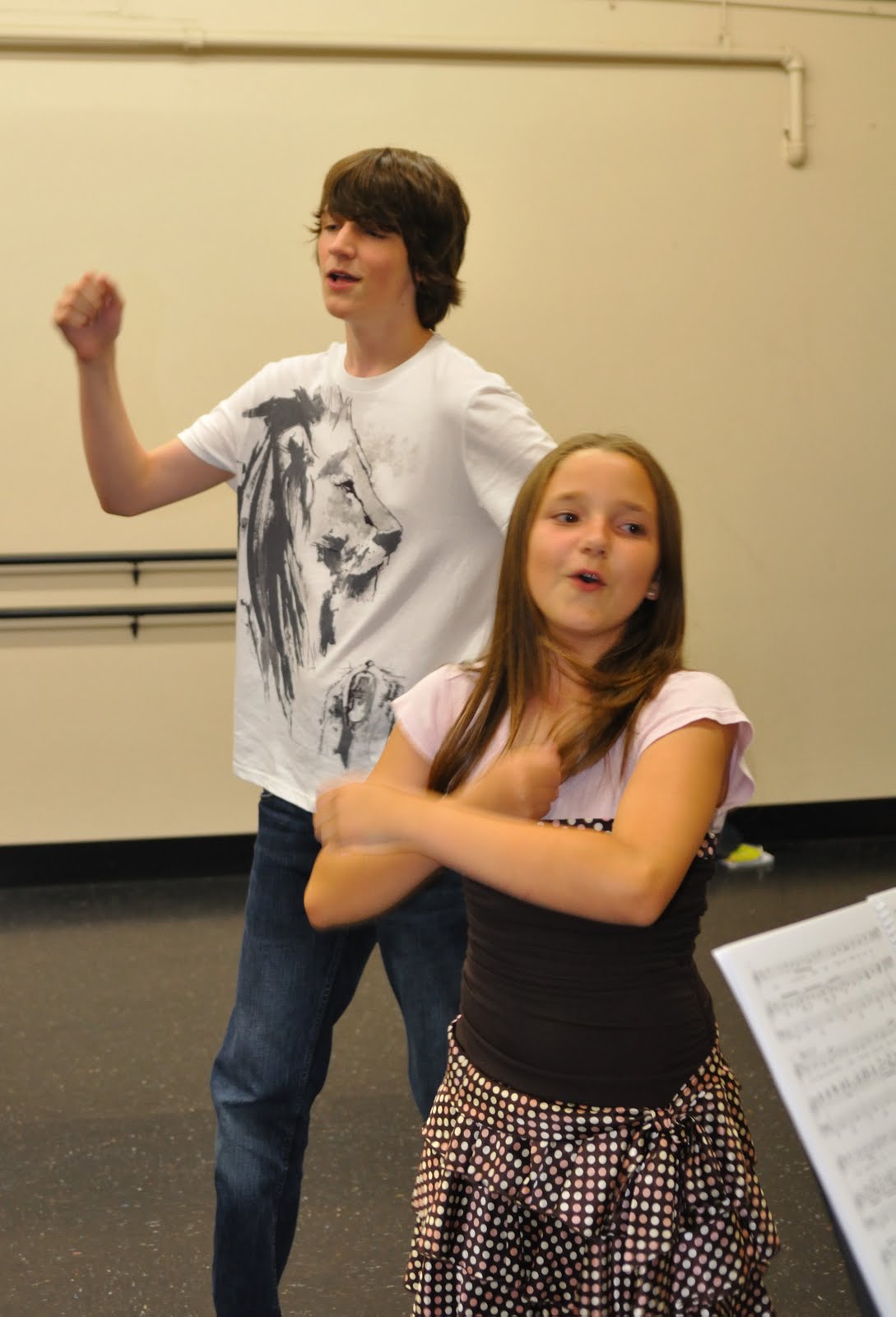
I got to visit “Wonderland” (for now, a dance studio on the east side of Olympia). I saw “Alice” shrink and grow, I saw a pompous dodo bird directing a host of goldfish, mermaids, and lobsters in a caucus race, and I saw a group of kids aged 6-15 having a great time.

It isn’t all adventures in Wonderland. There’s a lot of hard work—learning lines, songs, and dance steps. Sometimes (okay often) the studio is hot. And sometimes (okay often) there’s a lot of waiting around and being quiet while other people are doing their parts. It’s an ambitious project—a full-scale musical complete with song and dance numbers, costumes, and sets ready to go on in about four weeks. (Not to mention wrangling more than 40 kids aged 6-15). If what I saw today is any indication, this will be another fun and amazing production.

Anyone who is familiar with the Disney version of “Alice in Wonderland” will recognize the songs, the characters, and many of the scenes. The Mad Hatter is there, the white rabbit, the Queen of Hearts, a caterpillar and twin boys, one of which may (or may not) be named Dum. You’ll see my favorite character, the Cheshire Cat in triplicate and several versions of Alice, from small to tall.

Mark your calendars now for a fun night of family entertainment. “Alice in Wonderland” will be performed at the Timberline high school theater in Lacey, (6120 Mullen Road Southeast) and will run July 22nd, and 23rd and 29th and 30th. There will be a matinee performance each day from 10-11:15 and an evening performance from 7-8:15. Tickets at the door are $7 for individuals and $25 for a family. Advance and group tickets are being sold by cast members for $5 for an individual and $20 for a family. You can contact me through this blog or Elizabeth Bretschneider at ehbretsc@comcast.net for more information.